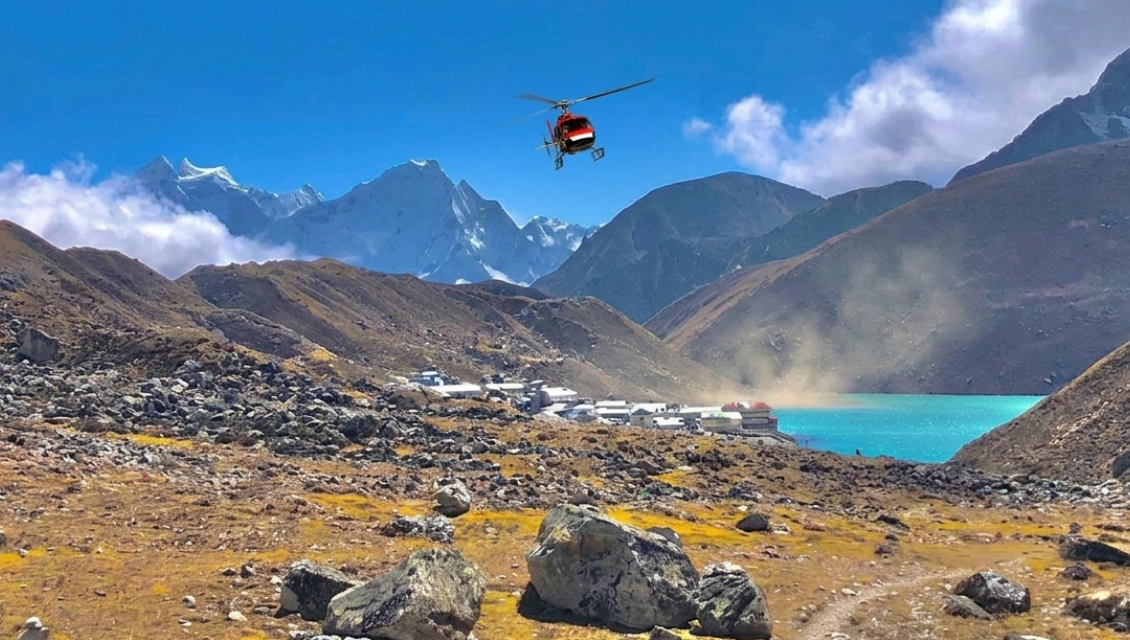
Budget
USD 3890
Per Person
Rating
No review has been posted yet
Duration
15 Days
Trip Overview
The Kathmandu – Lhasa – Everest Base Camp Motorcycle Adventure is one of the most thrilling overland motorcycle expeditions in the Himalayas, combining high-altitude riding, cultural exploration, and breathtaking Himalayan scenery.
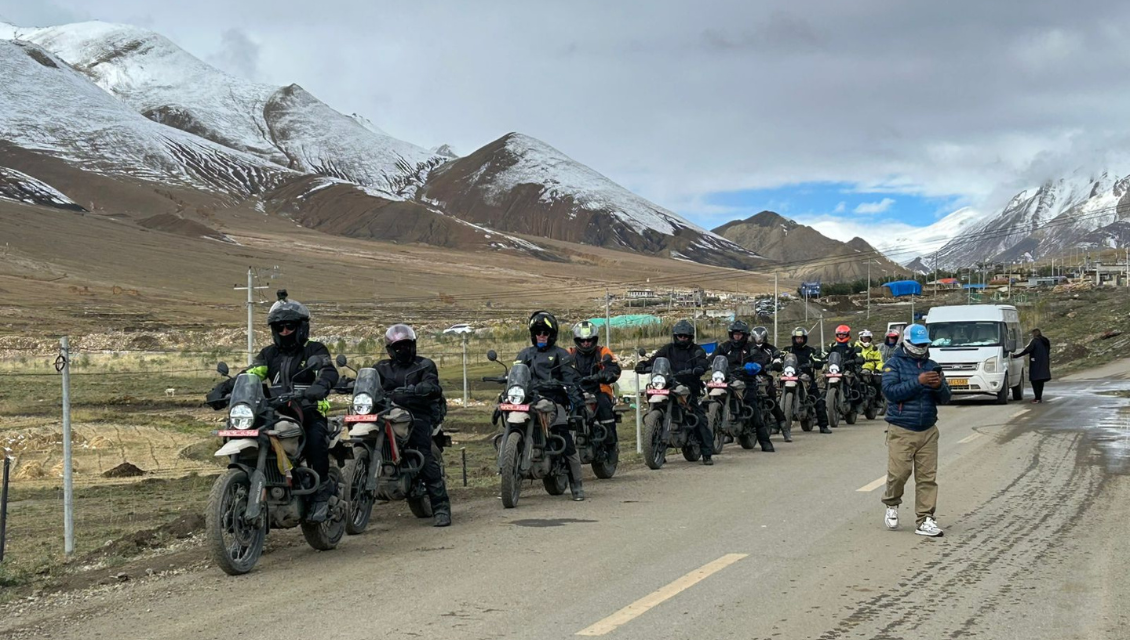
Starting from the Nepal–Tibet border, this journey takes riders across the vast Tibetan Plateau through remote valleys, ancient monasteries, sacred lakes, and iconic Himalayan landscapes before reaching the historic city of Lhasa and the legendary Everest Base Camp (5,200m).
Riders will experience some of the world’s highest motorable roads, crossing dramatic mountain passes above 5,000 meters while visiting key cultural and spiritual landmarks including Potala Palace, Jokhang Temple, Yamdrok Lake, Tashilhunpo Monastery, and Rongbuk Monastery.
Designed for experienced adventure motorcyclists, this expedition offers a perfect blend of adrenaline, cultural discovery, and high-altitude Himalayan exploration.
Geography and Landscape
The route traverses the central and southern Tibetan Autonomous Region, often referred to as the “Roof of the World.” The journey begins in lush Himalayan valleys near the Nepal border and gradually ascends to the vast, high-altitude Tibetan Plateau.
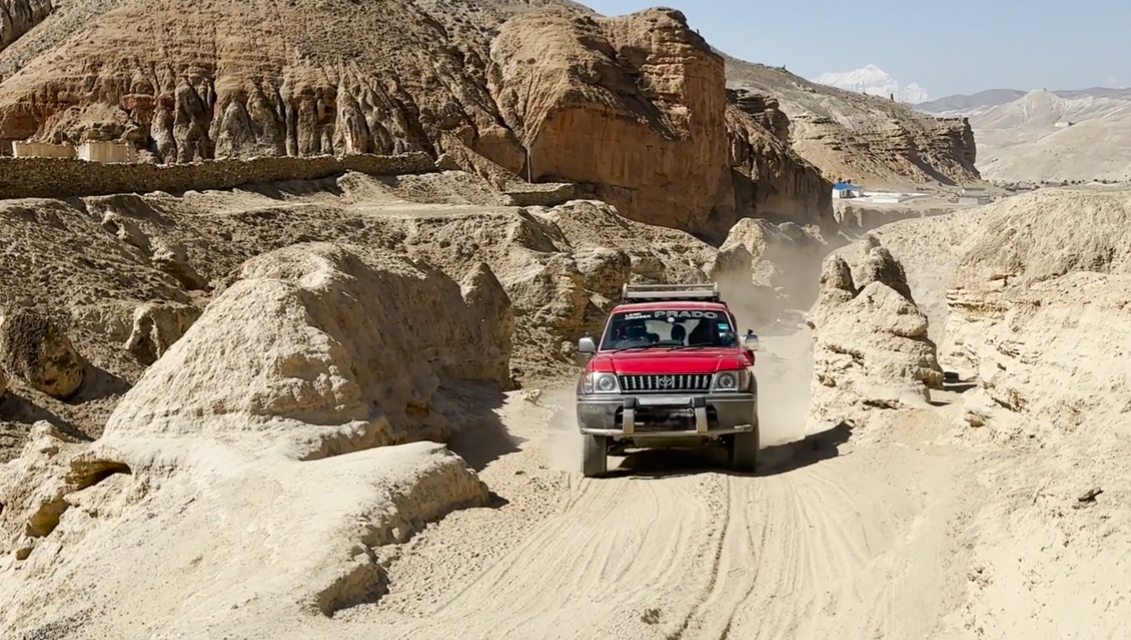
Riders cross endless open plains, alpine deserts, glacial rivers, and rugged mountain ranges framed by the Himalayas and Trans-Himalayan peaks. The landscape is constantly changing, offering dramatic contrasts between green valleys, barren plateaus, and snow-covered peaks.
Key highlights include the turquoise waters of Yamdrok Lake (4,441m), the massive Karo La Glacier (5,010m), and the panoramic viewpoints of the world’s highest mountains including Mount Everest, Lhotse, Makalu, and Cho Oyu.
The ride to Everest Base Camp passes through the dramatic Gawula Pass, followed by the stark, high-altitude terrain surrounding Rongbuk Monastery (5,000m+), the world’s highest monastery.
Climate and Best Time to Visit
Tibet’s climate is high-altitude, dry, and strongly influenced by altitude and sunlight intensity. Weather conditions can change quickly, especially in mountain regions.
Spring (April – May)
Clear skies, moderate temperatures, and fewer travelers make this a good early-season option.
Summer (June – August)
The most popular season, with mild temperatures and relatively stable riding conditions, though occasional rain may occur.
Autumn (September – October)
The best season for motorcycle expeditions with stable weather, crystal-clear visibility, and ideal riding conditions.
Winter (November – March)
Extremely cold with possible road restrictions, making it unsuitable for motorcycle travel.
Best Time for the Tour
The ideal period is May to October, with September and October offering the most stable weather and best Himalayan visibility.
People and Culture
Tibet is home primarily to ethnic Tibetans whose traditional Buddhist culture remains deeply preserved. Life is centered around monasteries, prayer rituals, and spiritual traditions that have existed for centuries.
Tibetan Buddhism is visible throughout the journey in the form of prayer flags, mani walls, stupas, and ancient monasteries. Pilgrimage remains an important part of daily life.
Lhasa, the capital of Tibet, is a major spiritual center, home to Potala Palace, once the residence of the Dalai Lama, and Jokhang Temple, the most sacred temple in Tibetan Buddhism.
The Everest region is inhabited by Tibetan and Sherpa communities who maintain strong cultural and spiritual ties with the mountains, living in harmony with the extreme high-altitude environment.
Package Highlights:
- Ride across the legendary Tibetan Plateau
- Explore UNESCO World Heritage sites in Lhasa
- Visit Potala Palace and Jokhang Temple
- Ride alongside the sacred Yamdrok Lake
- Cross high Himalayan passes above 5,000m
- Experience Karo La Glacier viewpoint
- Reach Everest Base Camp (5,200m)
- Visit Rongbuk Monastery, the world’s highest monastery
- Witness panoramic views of Mount Everest and Himalayan giants
- Explore traditional Tibetan culture and monasteries
- Fully supported motorcycle expedition with guide and crew
- Experience one of the world’s highest and most scenic road journeys
Book This Trip
Trip Information
 Start : Kathmandu
 Finish : Kathmandu
 Difficulty :
Moderate
Difficulty :
Moderate
 Max Altitude : 5,200 m
 Group Size : 15 People
 Season : All the Year
Trip Gallery
Trip Itinerary
Upon arrival at Tribhuvan International Airport in Kathmandu, you will be warmly welcomed by our representative and transferred to your hotel. The rest of the day is free for rest, relaxation, and preparation for the upcoming motorcycle expedition.
In the evening, a short briefing will be provided covering itinerary, safety guidelines, riding conditions, and border procedures.
Accomadation: Hotel
Place to visit: Nepal
Meals: Dinner
After breakfast, submit your passport for the Chinese Group Visa and Tibet Travel Permit process. While documentation is being arranged, enjoy a guided sightseeing tour of Kathmandu’s UNESCO World Heritage Sites, including Pashupatinath Temple and Boudhanath Stupa.
Evening pre-trip briefing with expedition team.
Accomadation: Hotel
Place to visit: Nepal
Meals: Breakfast
Distance: ~25 km riding (after border)
Early drive to the Nepal–Tibet border, complete immigration formalities, and meet the Tibetan guide and support crew. Short ride into Kyirong, a scenic Himalayan border town surrounded by green valleys and snow peaks.
Afternoon for acclimatization and bike familiarization.
Accomadation: Guest House
Place to visit: Nepal
Meals: Breakfast Lunch Dinner
Distance: ~320 km
Riding: 6–7 hrs
Ascend onto the Tibetan Plateau through dramatic high-altitude landscapes. Ride across wide grasslands and pass views of Shishapangma.
Arrive at Old Tingri, a historic Himalayan trading town.
Accomadation: Guest House
Place to visit: Tibet
Meals: Breakfast Lunch Dinner
Distance: ~250 km
Riding: 4–5 hrs
Ride across vast Tibetan plains, passing traditional villages and agricultural zones. Arrive in Shigatse, Tibet’s second-largest city and an important spiritual center.
Accomadation: Guest House
Place to visit: Tibet
Meals: Breakfast Lunch Dinner
Distance: ~95 km
Riding: 2 hrs
Visit Tashilhunpo Monastery before riding to Gyantse. Explore Gyantse Kumbum Stupa and Pelkor Chode Monastery.
Accomadation: Guest House
Place to visit: Tibet
Meals: Breakfast Lunch Dinner
Distance: ~270 km
Riding: 5–6 hrs
Cross Karo La Pass and pass glaciers and sacred landscapes. Visit Yamdrok Lake before arriving in Lhasa.
Accomadation: Guest House
Place to visit: Tibet
Meals: Breakfast Lunch Dinner
Visit the iconic Potala Palace, Jokhang Temple, and Barkhor Market.
Accomadation: Guest House
Place to visit: Tibet
Meals: Breakfast Lunch Dinner
Explore Sera Monastery and Drepung Monastery. Learn about Tibetan Buddhism and monastic culture.
Accomadation: Guest House
Place to visit: Tibet
Meals: Breakfast Lunch Dinner
Distance: ~420 km
Riding: 7–8 hrs
Ride along the Yarlung Tsangpo River through high valleys and remote settlements to Lhatse.
Accomadation: Guest House
Place to visit: Tibet
Meals: Breakfast Lunch Dinner
Distance: ~170 km
Riding: 3–4 hrs
Ride across high passes with panoramic Himalayan views toward Xegar, gateway to Everest region.
Accomadation: Guest House
Place to visit: Tibet
Meals: Breakfast Lunch Dinner
Distance: ~220 km
Riding: 5–6 hrs
Ride via Gawula Pass to Mount Everest Base Camp (Tibet side). Visit Rongbuk Monastery and enjoy Everest views before returning.
Accomadation: Guest House
Place to visit: Tibet
Meals: Breakfast Lunch Dinner
Distance: ~320 km
Riding: 6–7 hrs
Descend from the plateau through dramatic valleys back to Kyirong.
Accomadation: Guest House
Place to visit: Tibet
Meals: Breakfast Lunch Dinner
Cross border formalities and return to Kathmandu. End of expedition ride.
Accomadation: Hotel
Place to visit: Nepal
Meals: Breakfast Lunch Dinner
Transfer to Tribhuvan International Airport for onward journey.
Place to visit: Nepal
Meals: Breakfast
Cost Includes
Transportation
- Private tourist vehicle for airport pickup and drop-off in Kathmandu
- Kathmandu – Kyirong border – Kathmandu ground transportation
- Tibet section fully supported by motorcycles (as per package category)
- Fuel for motorcycles during Tibet riding section (as per itinerary coverage)
- Support vehicle (mechanic/backup/assistance vehicle) throughout Tibet section
- All road taxes, parking fees, and toll charges in Tibet
Motorcycle & Riding Support
- Fully maintained adventure motorcycles (250cc–500cc range or equivalent)
- Basic riding gear support (helmet, gloves where included in package category)
- On-road technical and mechanical support
- Spare parts and basic repair assistance during expedition
- Backup motorcycle in case of breakdown (subject to availability)
Accommodation & Meals
- 3 nights hotel accommodation in Kathmandu (bed & breakfast basis)
- Standard hotels in Tibet (Kyirong, Tingri, Shigatse, Lhasa, etc.) on twin-sharing basis
- Basic guesthouse accommodation near Everest Base Camp (Rongbuk/EBC area)
- Daily breakfast throughout the journey
- Full-board meals (breakfast, lunch, dinner with tea/coffee) during Tibet riding section (except Kathmandu)
Permits & Documentation
- Tibet Travel Permit (TTP)
- Military / Restricted Area Permit for Tibet overland travel
- Chinese Group Visa arrangement support (processed in Kathmandu)
- All required permits for Everest Base Camp motorcycle route
Guide & Riding Crew
- Professional English-speaking Tibetan guide throughout Tibet section
- Experienced motorcycle lead guide (road captain)
- Mechanic and support crew for entire expedition
- Emergency first aid kit and basic oxygen support
- Navigation and route support throughout the ride
Safety & Support Services
- Backup support vehicle for luggage and emergency assistance
- Basic medical support kit for high-altitude riding conditions
- Emergency communication support during remote sections
- Coordination assistance at border crossings
Government Taxes & Service Charges
- All applicable Tibet government taxes and local service charges
- Agency handling, coordination, and operational fees
Transportation
- Private tourist vehicle for airport pickup and drop-off in Kathmandu
- Kathmandu – Kyirong border – Kathmandu ground transportation
- Tibet section fully supported by motorcycles (as per package category)
- Fuel for motorcycles during Tibet riding section (as per itinerary coverage)
- Support vehicle (mechanic/backup/assistance vehicle) throughout Tibet section
- All road taxes, parking fees, and toll charges in Tibet
Motorcycle & Riding Support
- Fully maintained adventure motorcycles (250cc–500cc range or equivalent)
- Basic riding gear support (helmet, gloves where included in package category)
- On-road technical and mechanical support
- Spare parts and basic repair assistance during expedition
- Backup motorcycle in case of breakdown (subject to availability)
Accommodation & Meals
- 3 nights hotel accommodation in Kathmandu (bed & breakfast basis)
- Standard hotels in Tibet (Kyirong, Tingri, Shigatse, Lhasa, etc.) on twin-sharing basis
- Basic guesthouse accommodation near Everest Base Camp (Rongbuk/EBC area)
- Daily breakfast throughout the journey
- Full-board meals (breakfast, lunch, dinner with tea/coffee) during Tibet riding section (except Kathmandu)
Permits & Documentation
- Tibet Travel Permit (TTP)
- Military / Restricted Area Permit for Tibet overland travel
- Chinese Group Visa arrangement support (processed in Kathmandu)
- All required permits for Everest Base Camp motorcycle route
Guide & Riding Crew
- Professional English-speaking Tibetan guide throughout Tibet section
- Experienced motorcycle lead guide (road captain)
- Mechanic and support crew for entire expedition
- Emergency first aid kit and basic oxygen support
- Navigation and route support throughout the ride
Safety & Support Services
- Backup support vehicle for luggage and emergency assistance
- Basic medical support kit for high-altitude riding conditions
- Emergency communication support during remote sections
- Coordination assistance at border crossings
Government Taxes & Service Charges
- All applicable Tibet government taxes and local service charges
- Agency handling, coordination, and operational fees
Cost Excludes
International Flights
- Airfare from home country to Kathmandu
- Return international flight from Kathmandu to home country
Visa Fees
- Nepal entry visa fee (on arrival or prior arrangement)
- China Group Visa fee (payable separately as per arrangement)
Travel Insurance (Mandatory)
- Comprehensive travel insurance covering motorcycle riding at high altitude (up to 5,200m+)
- Emergency medical treatment
- Helicopter evacuation and rescue services
- Trip cancellation, delays, or interruptions
Personal Expenses
- Tips for guide, mechanic, driver, and support staff
- Personal riding gear (boots, jacket, protective clothing, etc.)
- Fuel or services outside the included itinerary coverage
- Hot showers, Wi-Fi, charging, and laundry in Tibet
- Motorcycle damage due to rider error (if applicable)
- Personal shopping, souvenirs, and extra hotel services
Meals & Beverages
- Lunch and dinner in Kathmandu
- Any meals not mentioned in the itinerary
- Bottled water, soft drinks, energy drinks, alcohol, and snacks
- Special dietary requests beyond standard group menu
International Flights
- Airfare from home country to Kathmandu
- Return international flight from Kathmandu to home country
Visa Fees
- Nepal entry visa fee (on arrival or prior arrangement)
- China Group Visa fee (payable separately as per arrangement)
Travel Insurance (Mandatory)
- Comprehensive travel insurance covering motorcycle riding at high altitude (up to 5,200m+)
- Emergency medical treatment
- Helicopter evacuation and rescue services
- Trip cancellation, delays, or interruptions
Personal Expenses
- Tips for guide, mechanic, driver, and support staff
- Personal riding gear (boots, jacket, protective clothing, etc.)
- Fuel or services outside the included itinerary coverage
- Hot showers, Wi-Fi, charging, and laundry in Tibet
- Motorcycle damage due to rider error (if applicable)
- Personal shopping, souvenirs, and extra hotel services
Meals & Beverages
- Lunch and dinner in Kathmandu
- Any meals not mentioned in the itinerary
- Bottled water, soft drinks, energy drinks, alcohol, and snacks
- Special dietary requests beyond standard group menu
Trip Date And Time
Select Your Preferred Departure - We'll Handle the Rest.
Essential Information
The Kathmandu to Lhasa via Everest Base Camp motorbike tour is one of the most extreme and adventurous Himalayan overland journeys. This expedition combines high-altitude riding across Nepal and Tibet, crossing some of the world’s highest mountain passes, vast plateaus, and reaching the iconic Everest Base Camp (Tibet side).
Riders experience a dramatic transition from Nepal’s green valleys to the barren, mystical landscapes of the Tibetan plateau, making this a once-in-a-lifetime motorcycling adventure.
Accommodation
Accommodation is arranged in a combination of comfortable hotels and basic guesthouses along the route.
- Kathmandu & major Nepal towns: 3–4 star hotels with modern amenities
- Kerung (border town) & Tibet entry points: Basic but clean hotels or guesthouses
- Shigatse & Gyantse: Standard mid-range hotels with essential facilities
- Lhasa: Comfortable 3–4 star hotels with better infrastructure
- Rongbuk (Everest Base Camp area): Very basic monastery lodges or tented accommodation depending on season
Rooms are generally twin-sharing with simple bedding. Facilities become more basic as altitude increases.
Meals
A full-board meal system (Breakfast, Lunch, and Dinner) is provided throughout the journey.
Food varies by region:
- Nepal side: Nepali, Indian, and continental meals
- Tibet side: Tibetan and Chinese cuisine
- High altitude regions: simple, energy-focused meals
Typical options include:
- Fried rice, noodles, and pasta
- Dal Bhat (Nepali staple)
- Momos (dumplings)
- Soups and vegetables
- Eggs, toast, pancakes
- Tea, coffee, and hot drinks
Food variety reduces in remote Tibetan areas due to logistics.
Difficulty & Physical Requirements
This is an extreme-level motorbike expedition suitable only for experienced riders.
Key challenges include:
- Long riding days (5–10 hours)
- High-altitude passes above 5,000m
- Cold, wind, and unpredictable weather conditions
- Rough, gravel, and off-road sections in Tibet
- Thin air and reduced oxygen levels
Riders should have:
- Strong motorcycle handling experience (preferably adventure/dual-sport bikes)
- Prior high-altitude or long-distance riding experience
- Good physical fitness and endurance
No technical trekking is required, but riding skill and stamina are critical.
Permits
Required permits include:
- Tibet Travel Permit (TTB)
- Chinese Group Visa
- Alien Travel Permit (for restricted areas)
- Military permits for Everest Base Camp region
All permits must be processed through a registered Tibetan tour operator. Independent travel is not allowed.
Best Season
- April–June: Best riding conditions, clear skies, stable weather
- September–November: Excellent visibility, dry roads, ideal temperatures
- December–February: Extremely cold, high risk of road ice and closures
- July–August: Monsoon in Nepal; Tibet remains relatively dry but with cloud cover
Transportation & Route
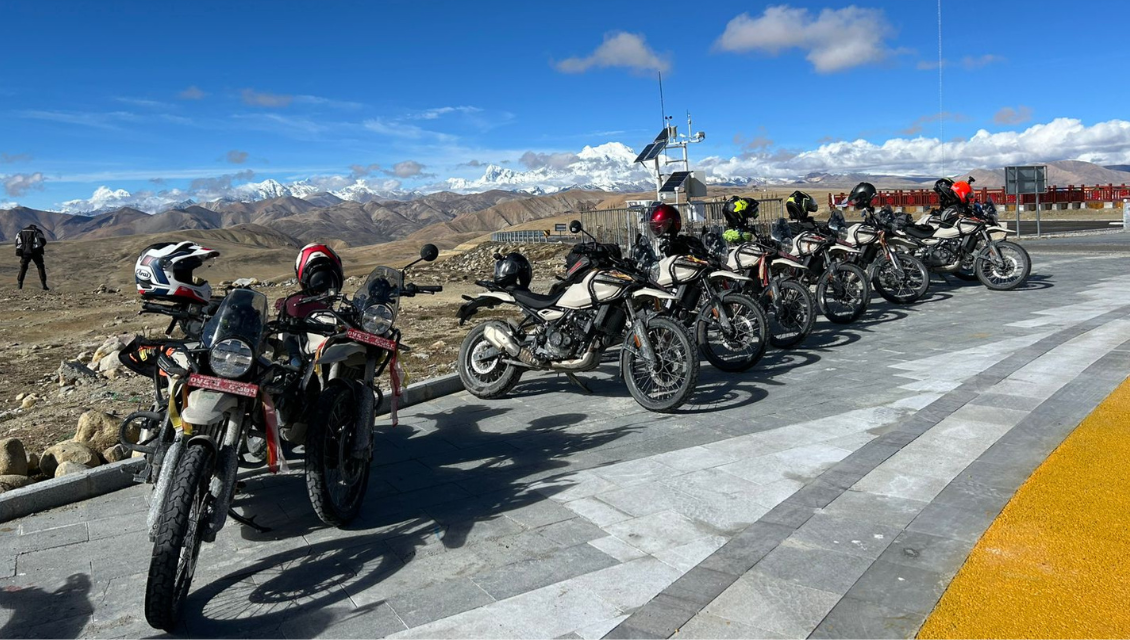
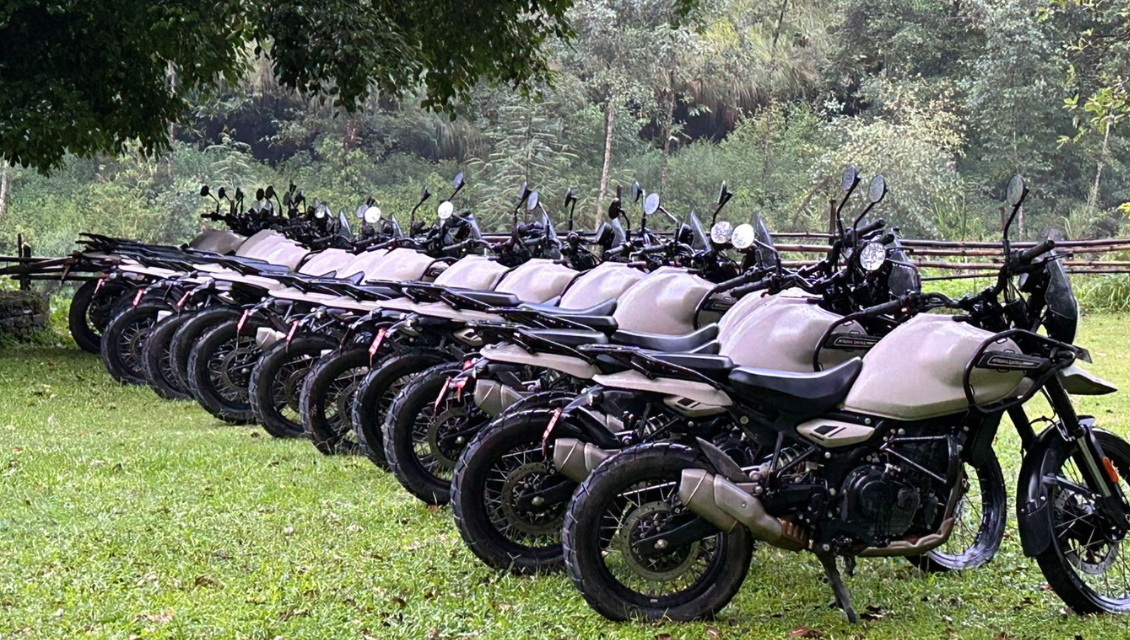
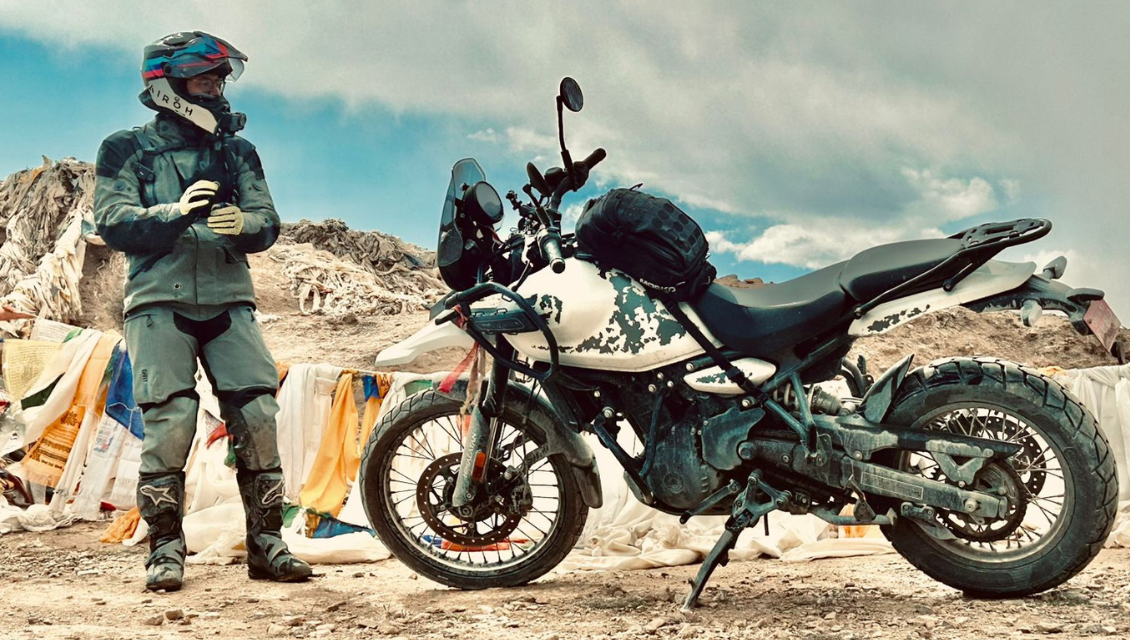
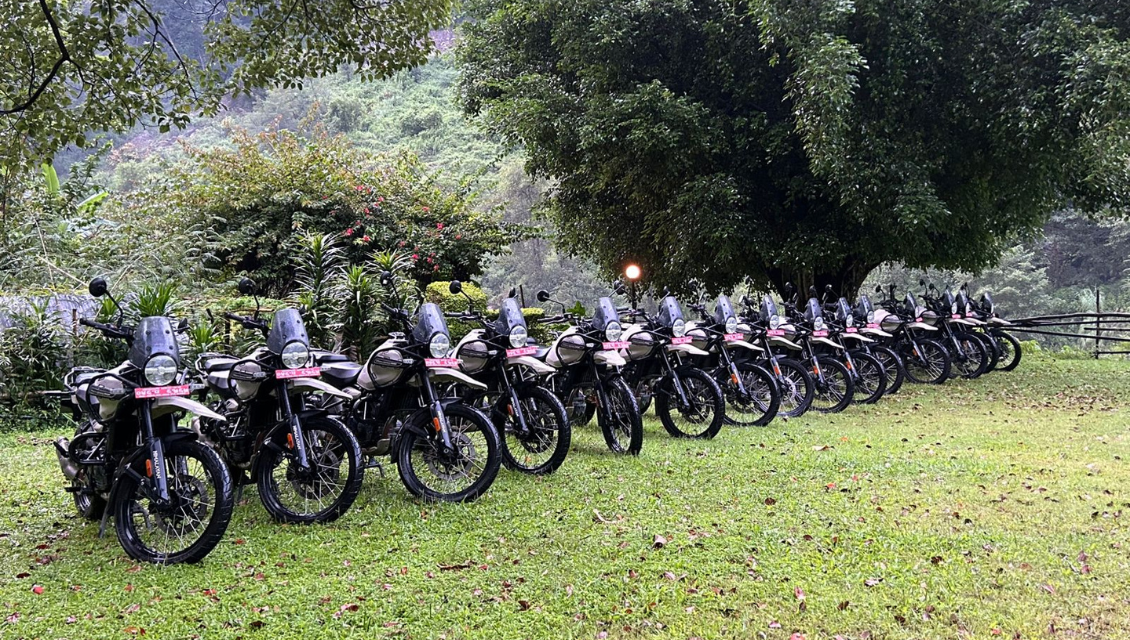
The journey is completed on fully supported adventure motorbikes (commonly Royal Enfield Himalayan or equivalent 411cc/450cc class bikes), with a backup support vehicle.
Typical route:
Kathmandu → Kyirong (border) → Tingri → Shigatse → Gyantse → Lhasa → Everest Base Camp (Rongbuk) → Return or exit route
Key highlights include:
- Himalayan highway riding in Nepal
- Crossing the Nepal–Tibet border at Kerung
- Riding across Tibetan plateau highways
- High passes such as Lalung La, Gyatso La, and Karo La
- Final approach to Everest Base Camp (North face view)
Safety & Acclimatization
Due to extreme altitude, acclimatization is critical.
Safety measures include:
- Gradual ascent from Nepal to Tibet
- Rest days in Lhasa and Shigatse
- Controlled riding pace with support vehicle
- Oxygen availability in emergency cases
- Daily health monitoring by guide team
Riders are strictly advised not to rush sections above 4,000m–5,000m.
Travel Insurance
Mandatory insurance must include:
- High-altitude coverage (up to 5,500m+)
- Motorbike riding coverage in foreign countries
- Emergency medical evacuation (heli rescue if needed)
- Trip interruption and accident coverage
Additional Information
Guide & Support Team
The expedition is fully supported by:
- Experienced Tibetan guide
- Professional motorcycle mechanic
- Support vehicle with spare parts and luggage
- Emergency oxygen and first-aid kit
Cultural & Natural Highlights
This journey offers unmatched Himalayan and Tibetan experiences:
- Kathmandu Valley cultural heritage
- Dramatic Himalayan landscapes
- Crossing into the Tibetan plateau
- Yamdrok Lake turquoise waters
- Gyantse fortress and Kumbum stupa
- Lhasa Potala Palace and Jokhang Temple
- Rongbuk Monastery – highest monastery in the world
- Everest Base Camp (North Face view of Everest)
Essential Equipment
Recommended riding gear:
- Full protective motorbike riding gear
- Helmet (DOT/ECE certified)
- Riding jacket with thermal layers
- Waterproof and windproof outer shell
- Riding gloves (thermal + waterproof)
- Riding boots (ankle protection)
- Thermal innerwear
- Sunglasses (UV protection)
- Hydration pack
- Basic personal medical kit
- Communication & Connectivity
- Good mobile coverage in Kathmandu and Lhasa
- Limited or no signal in remote Tibetan plateau areas
- Wi-Fi available in major hotels only
- Communication may be unavailable for long riding sections
Why Choose the Kathmandu – Lhasa – Everest Base Camp Motorbike Tour?
This is one of the most legendary high-altitude motorbike expeditions in the world:
- Ride across two countries and the Himalayan frontier
- Reach Everest Base Camp on motorcycle
- Experience Tibetan plateau landscapes and culture
- Cross multiple high mountain passes above 5,000m
- Fully supported expedition with logistics and safety backup
- Perfect blend of adventure, culture, and extreme riding challenge
- One of the most exclusive motorbike journeys on Earth
Faq's
This is a high-altitude Himalayan motorcycle expedition that starts in Kathmandu, crosses into Tibet, visits Lhasa and the North side of Everest Base Camp, and returns to Kathmandu via the same route. The tour combines adventure riding, Tibetan culture, monasteries, mountain passes, and panoramic Himalayan scenery.
Most Kathmandu–Lhasa–EBC motorbike tours take around 10–17 days depending on acclimatization days, sightseeing, and route design.
The highest point is generally around 5,200–5,300 meters near the North Everest Base Camp and surrounding Himalayan passes.
Yes, prior long-distance or mountain riding experience is strongly recommended. Riders should be comfortable with gravel roads, cold weather, changing terrain, and high-altitude conditions.
Most operators provide adventure touring motorcycles such as:
- Royal Enfield Himalayan
- Royal Enfield Classic 500
- Honda XR series
Availability depends on the package and operator.
Yes, many Tibet motorbike tours allow riders to bring their own registered motorcycles, but special permits and vehicle documentation are required for Tibet entry.
Yes. Travelers need:
- Chinese Visa
- Tibet Travel Permit
- Alien Travel Permit
- Temporary vehicle permits
- Temporary driving permit for Tibet
These are generally arranged by the tour operator. Independent riding in Tibet is not allowed.
The tour is considered moderately challenging to demanding due to:
- High altitude
- Long riding hours
- Remote terrain
- Cold weather conditions
Good physical fitness is highly recommended.
The ideal riding seasons are:
- April to June
- August to November
These months offer clearer skies and better road conditions.
Yes. Most itineraries include acclimatization stops in places like Kerung or Shigatse to help riders adjust safely to the altitude.
Accommodation usually includes:
Hotels in Kathmandu and Lhasa
Guesthouses or local lodges in remote Tibetan regions Twin-sharing basis unless private rooms are requested
Yes. Most organized tours include:
- Backup support vehicle
- Mechanic support
- Luggage transport
Oxygen and first-aid support
A mechanic generally accompanies the group, and essential spare parts and repair tools are carried during the expedition.
Fuel inclusion varies by operator. Some packages exclude fuel costs, while others include them. Always check the package inclusions carefully.
Yes. Comprehensive travel insurance covering:
- Motorcycle touring
- High-altitude evacuation
- Medical emergencies
- Trip cancellation
Internet and mobile coverage are available in major cities like Kathmandu, Shigatse, and Lhasa, but connectivity can be limited or unavailable in remote Himalayan regions.
You should carry:
- Passport valid for at least 6 months
- Visa documents
- International Driving Permit
- Passport-size photos
- Travel insurance documents
No. This tour is best suited for experienced riders due to extreme altitude, long distances, and demanding terrain.
Highlights include:
- Riding across the Tibetan Plateau Visiting Potala Palace
- Exploring Tibetan monasteries Riding to North Everest Base Camp
- Crossing Himalayan passes above 5,000 meters Experiencing Tibetan culture and landscapes
Most tours operate with small groups ranging from 2 to 12 riders for better safety and support.
USD 3890 / person
See group booking discount- No. of person Price per person
- 1 Pax 100$ Per Person
- 2 Pax 99$ Per Person
- 3 Pax 80$ Per Person
- 4 Pax 70$ Per Person
The price may varies
Speak to an Expert